Start the conversation
Case study
Himalaya
Discovery & Positioning
Design Language System
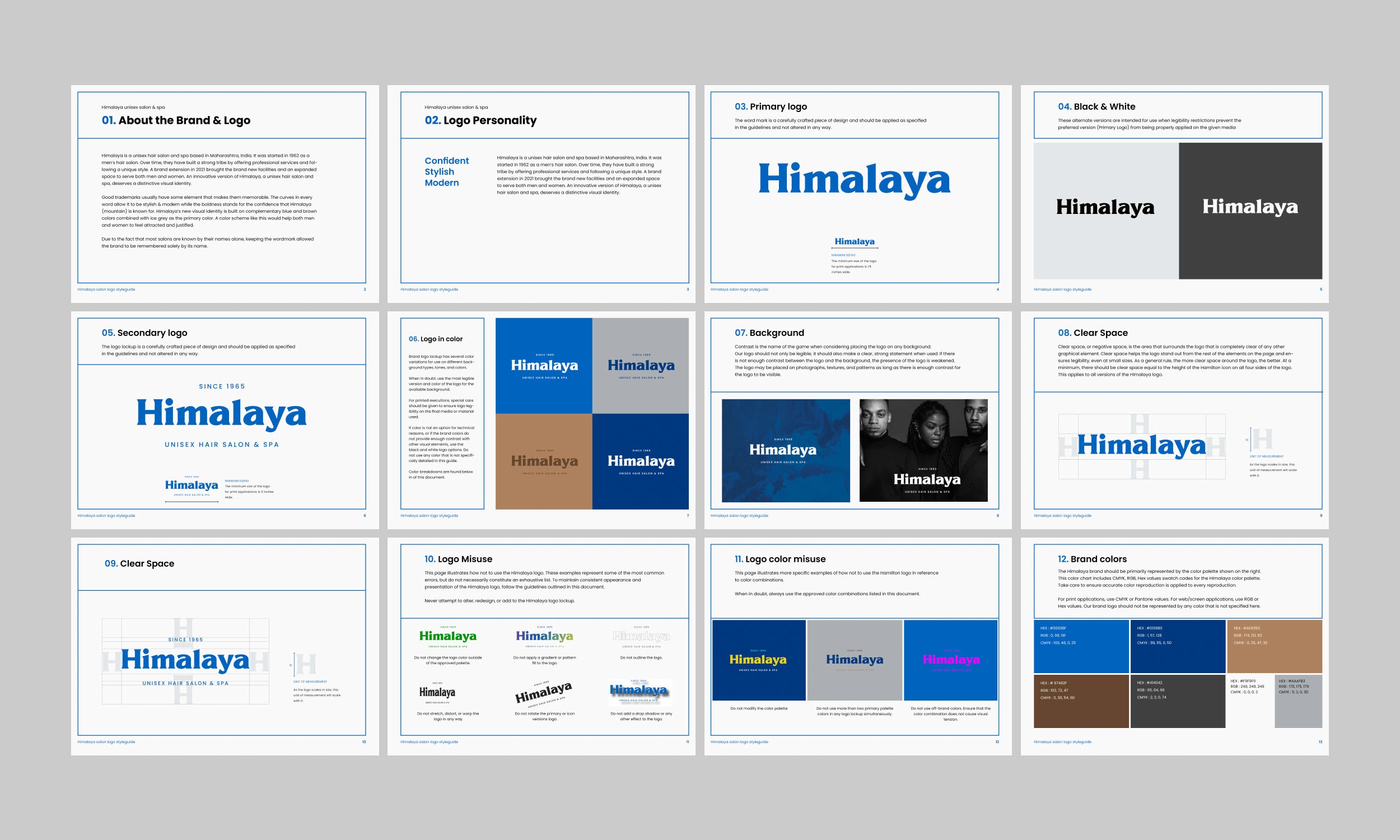
Brand Guidelines & Usage Framework
Environmental & Spatial Branding
Himalaya Unisex Hair Salon & Spa
Industry: Salon & Wellness
The objective of this project was to build a visual identity system that reflects the brand’s legacy, professionalism and modern evolution.
Brand Story
Himalaya is a unisex hair salon and spa based in Maharashtra, established in 1965. Originally started as a men’s salon, the brand built its reputation through skill, consistency, and long-term customer relationships. In 2021, the business expanded its services and space to cater to both men and women, transforming into a unisex salon and spa.
This transformation created the need for a new identity, one that respected the brand’s long legacy while positioning it as modern, confident and relevant for today’s audience.
The objective of this project was to build a visual identity system that reflects the brand’s legacy, professionalism and modern evolution.
The Challenge
The challenge was to create a legacy brand that feels modern without losing its authority and trust built over decades.
Key challenges included:
The brand had history but no structured identity.
The salon had evolved into a unisex space, but the brand still felt like a traditional men’s salon.
The physical environment had already moved toward a premium, minimal aesthetic and the existing brand language did not reflect the space and overall environment.
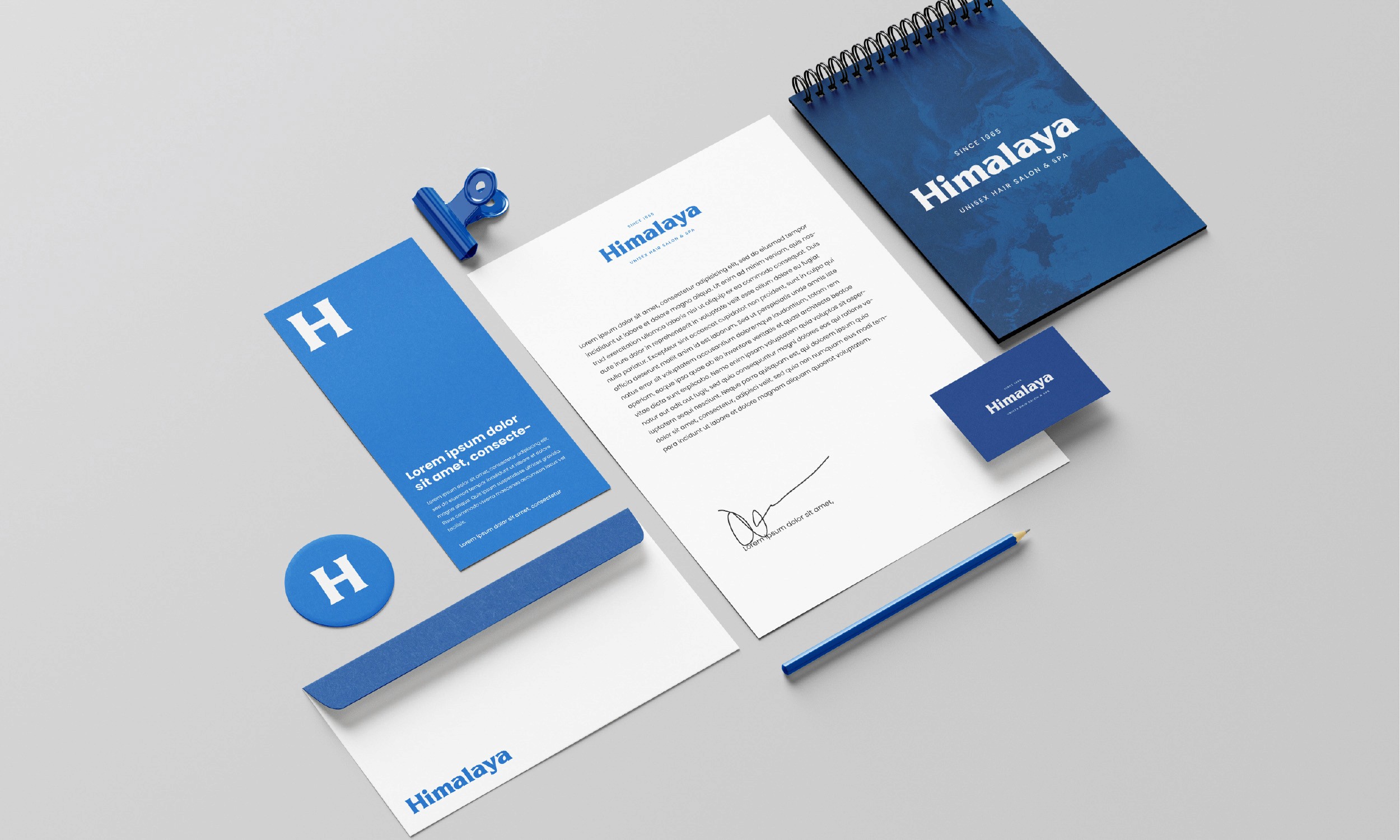
The business needed a consistent visual system for signage, stationery, print materials, and future expansion.
The risk was clear: If the brand continues to look outdated, it silently undervalues the experience it delivers.
Strategic Approach
The instinct in such transitions is often to “modernize” aggressively. We deliberately avoided that. Instead, the strategy focused on controlled evolution, not reinvention.
The brand was positioned as: A legacy salon that has evolved with confidence, not a new entrant trying to appear modern.
This distinction shaped every decision.
We defined the brand through a balanced set of attributes:
Confident, not loud
Stylish, not trend-driven
Modern, not temporary
Professional, not generic
Rooted, yet forward-looking
The goal was to create a brand that feels earned, not constructed.
Brand Identity
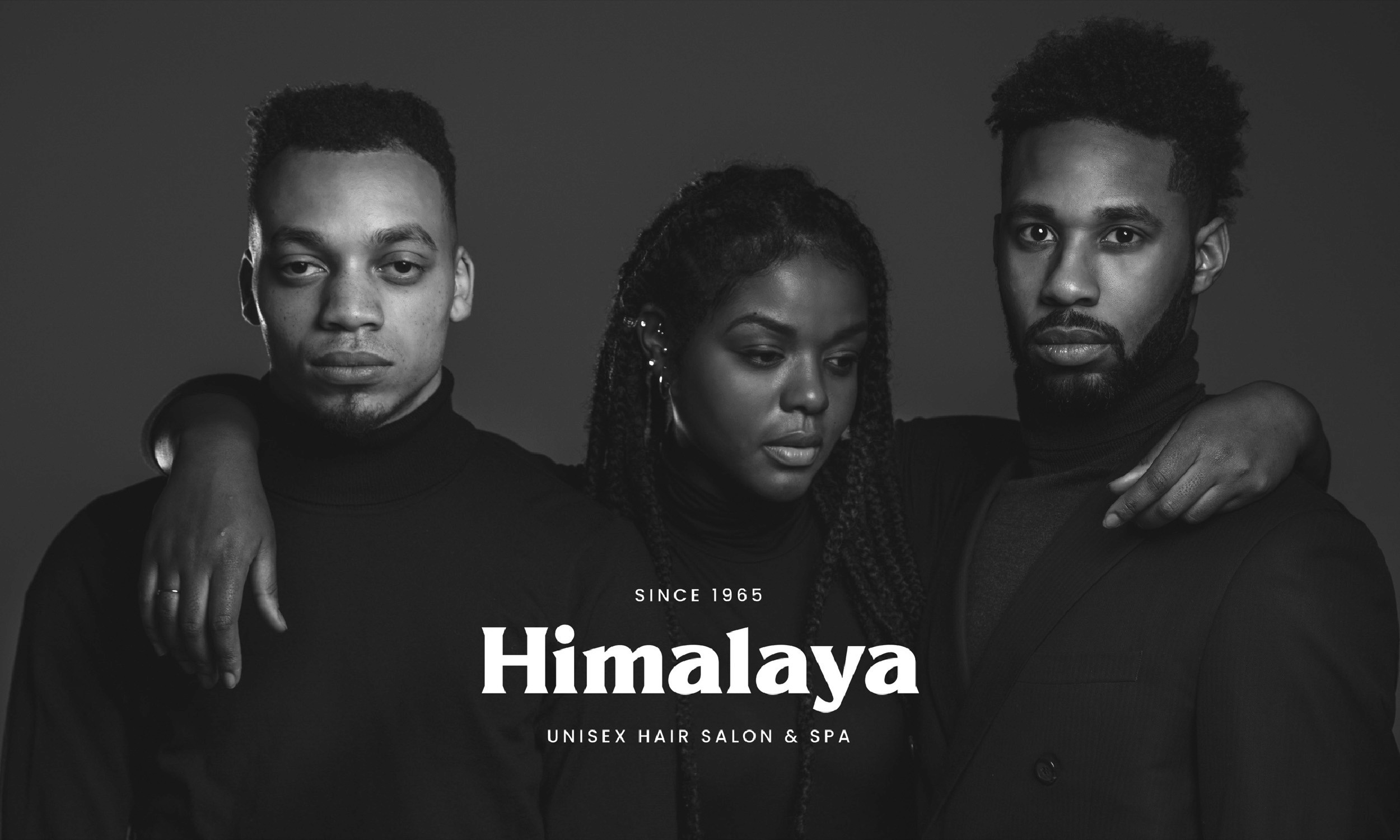
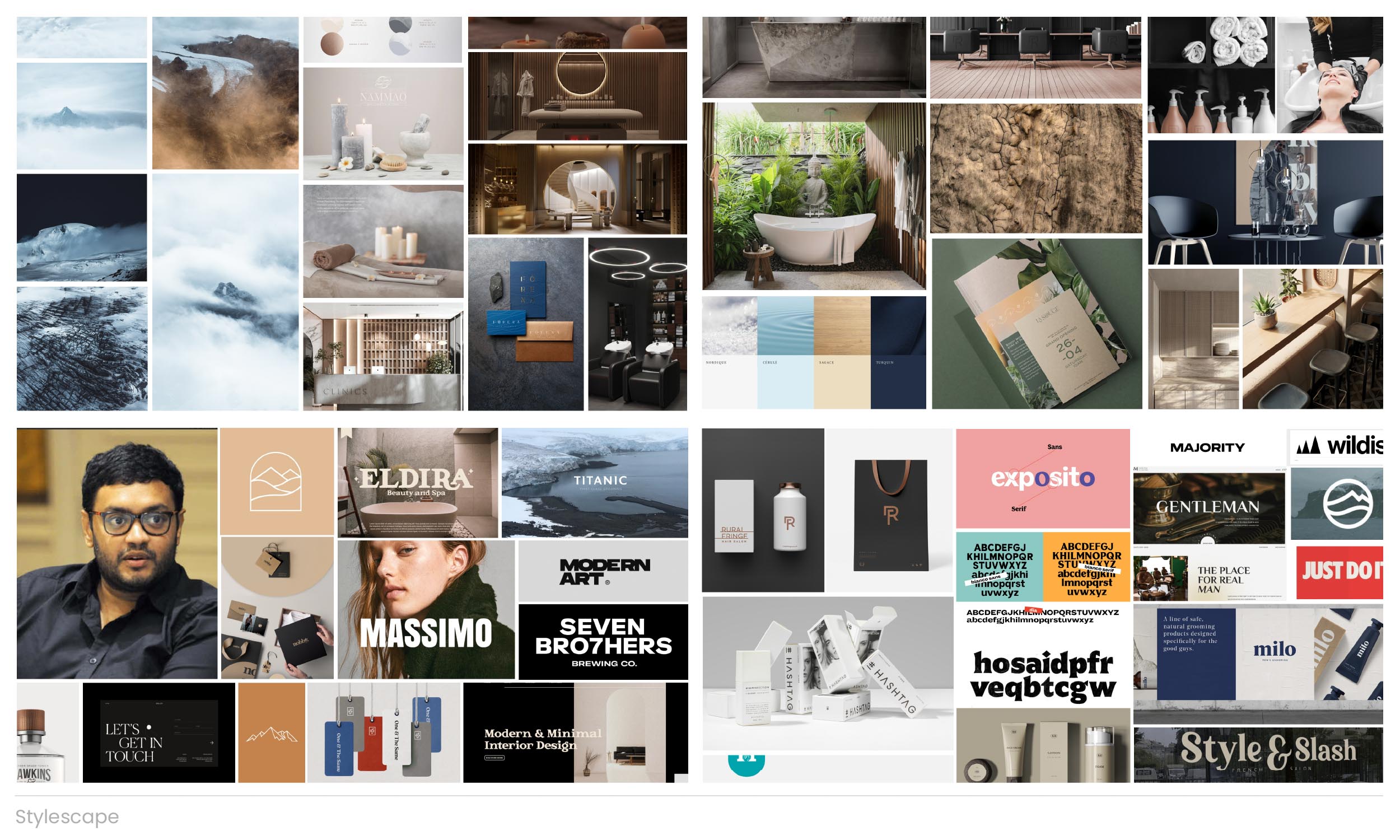
Identity Thinking
A. The Role of the Wordmark
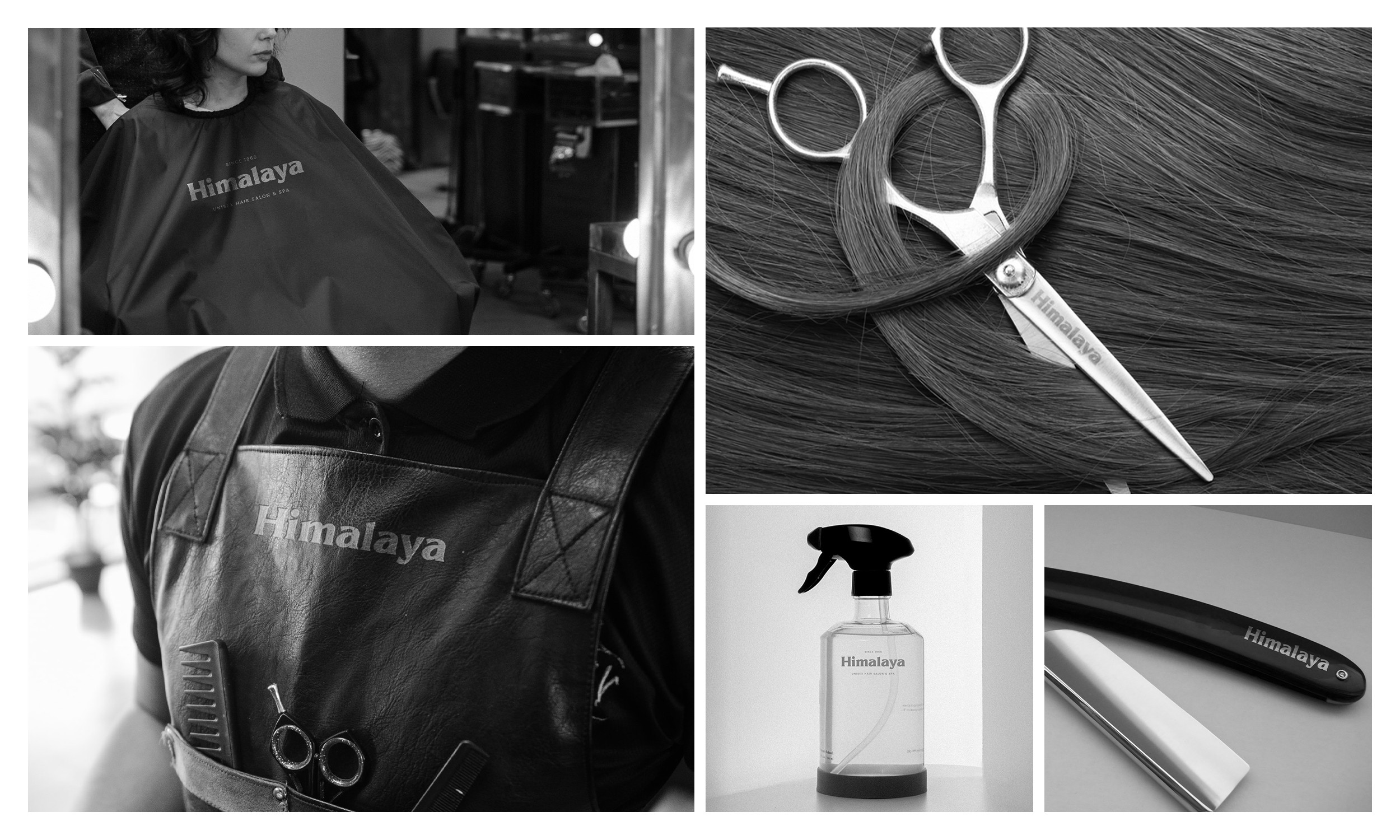
The identity is built around a bold serif wordmark. This was a strategic decision. In a category dominated by lightweight sans-serif identities attempting to signal modernity, we chose to signal authority and permanence.
The serif form communicates:
Institutional trust
Maturity
Stability
Timeless presence
It reflects a business that has not just existed, but endured. The typography is not decorative. It is declarative.
B. “Since 1965” as an Asset
Legacy is often mentioned, but rarely leveraged.
Here, “Since 1965” is not a footnote. It is a strategic signal.
It reinforces credibility instantly, especially in a category where trust and hygiene are critical decision factors.
Color Strategy
The palette was developed to move away from predictable “salon luxury” codes.
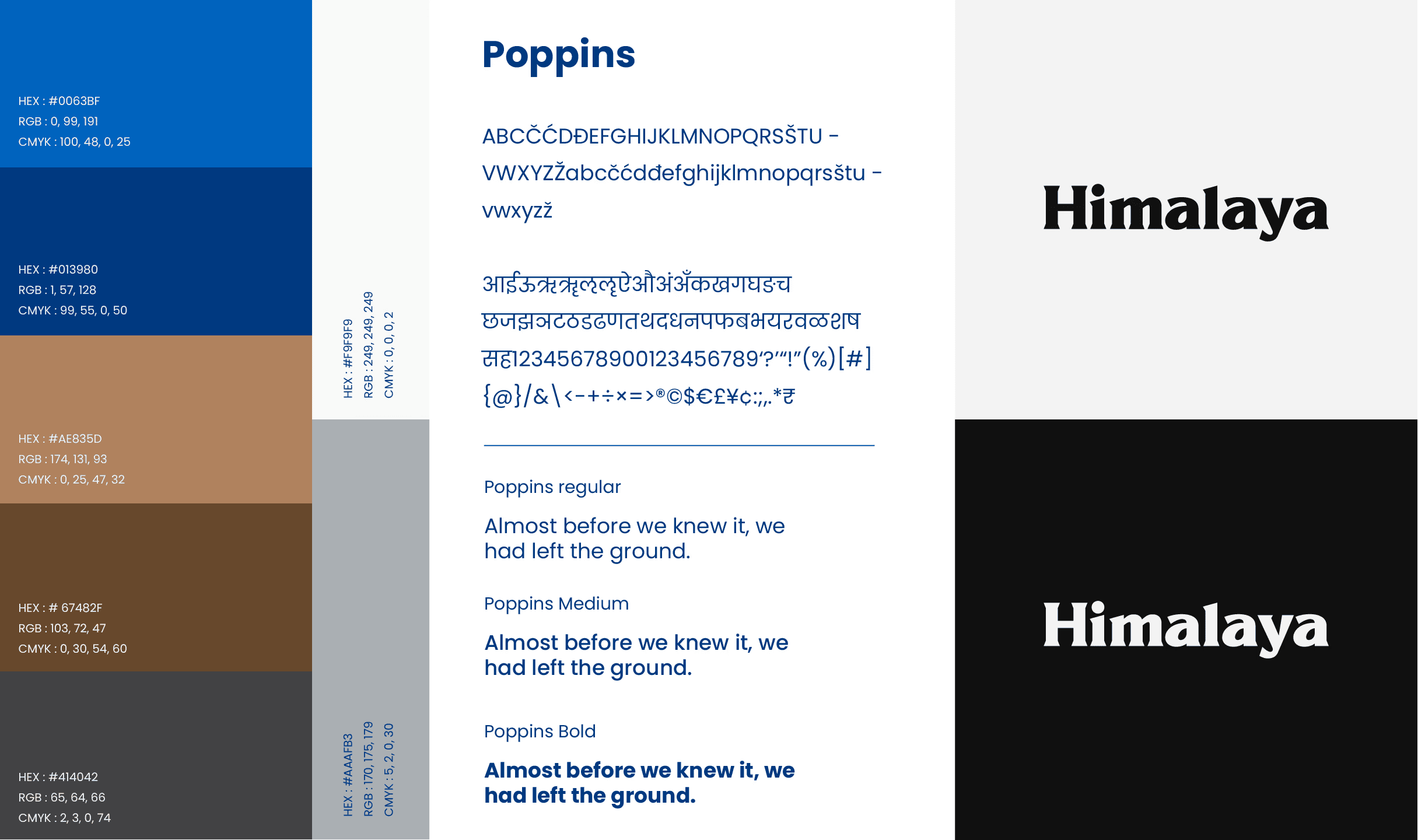
Instead of black-gold or overly soft pastels, the system uses:
Deep Blue: Trust, control, professionalism
Earth Brown: Groundedness, warmth, familiarity
Dark Grey: Sophistication and restraint
Light Grey: Spatial balance and neutrality
This palette achieves two important things:
It builds a premium yet approachable perception
It supports a gender-neutral environment, essential for a unisex space
The blue emerges as the primary recall driver, anchoring the brand across touchpoints.
Typography System
The combination of a serif wordmark and a modern sans-serif typeface (Poppins) is intentional.
It creates a dual-layer communication system:
The logo establishes heritage and authority
The communication typeface ensures clarity and modern usability
This balance allows the brand to operate seamlessly across print, digital, and spatial applications.
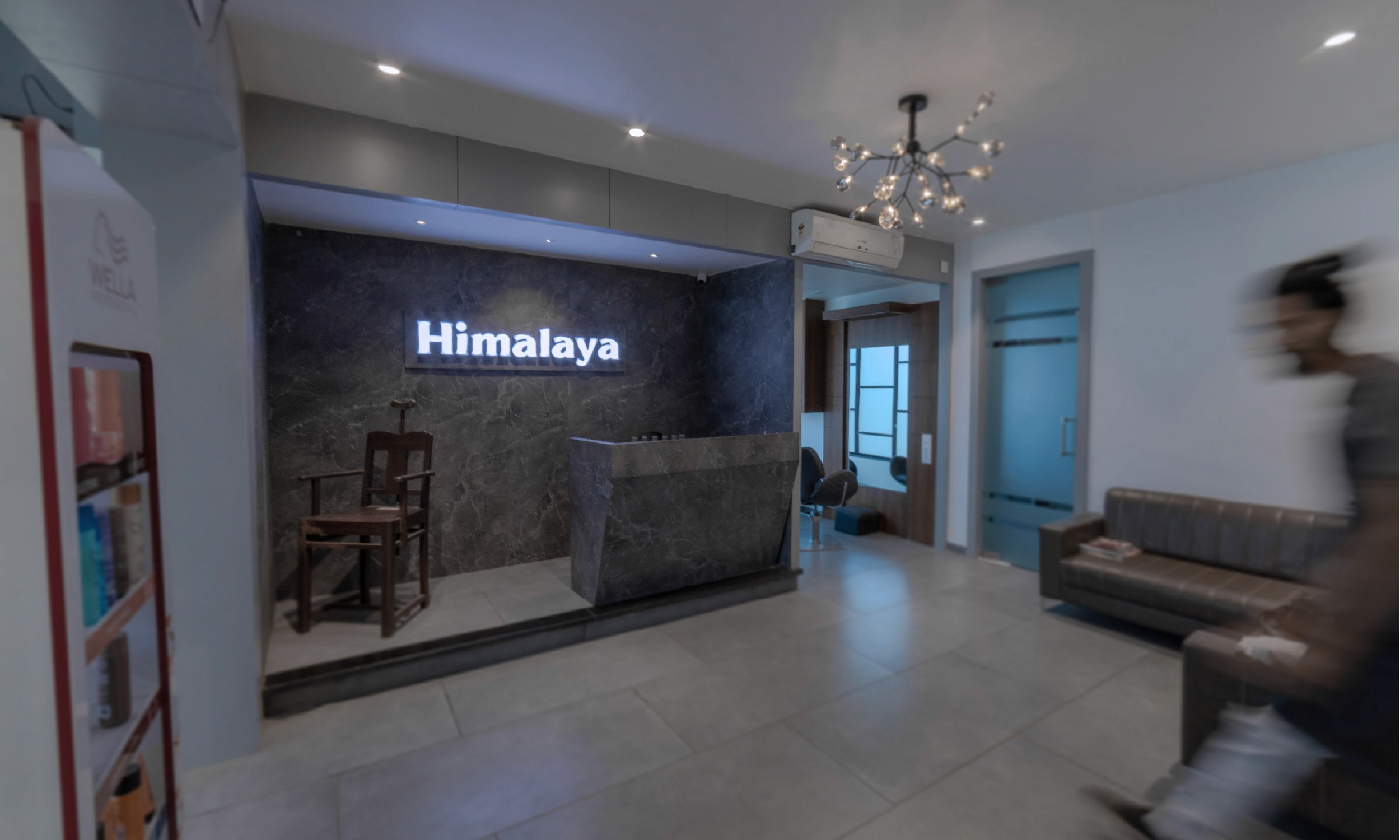
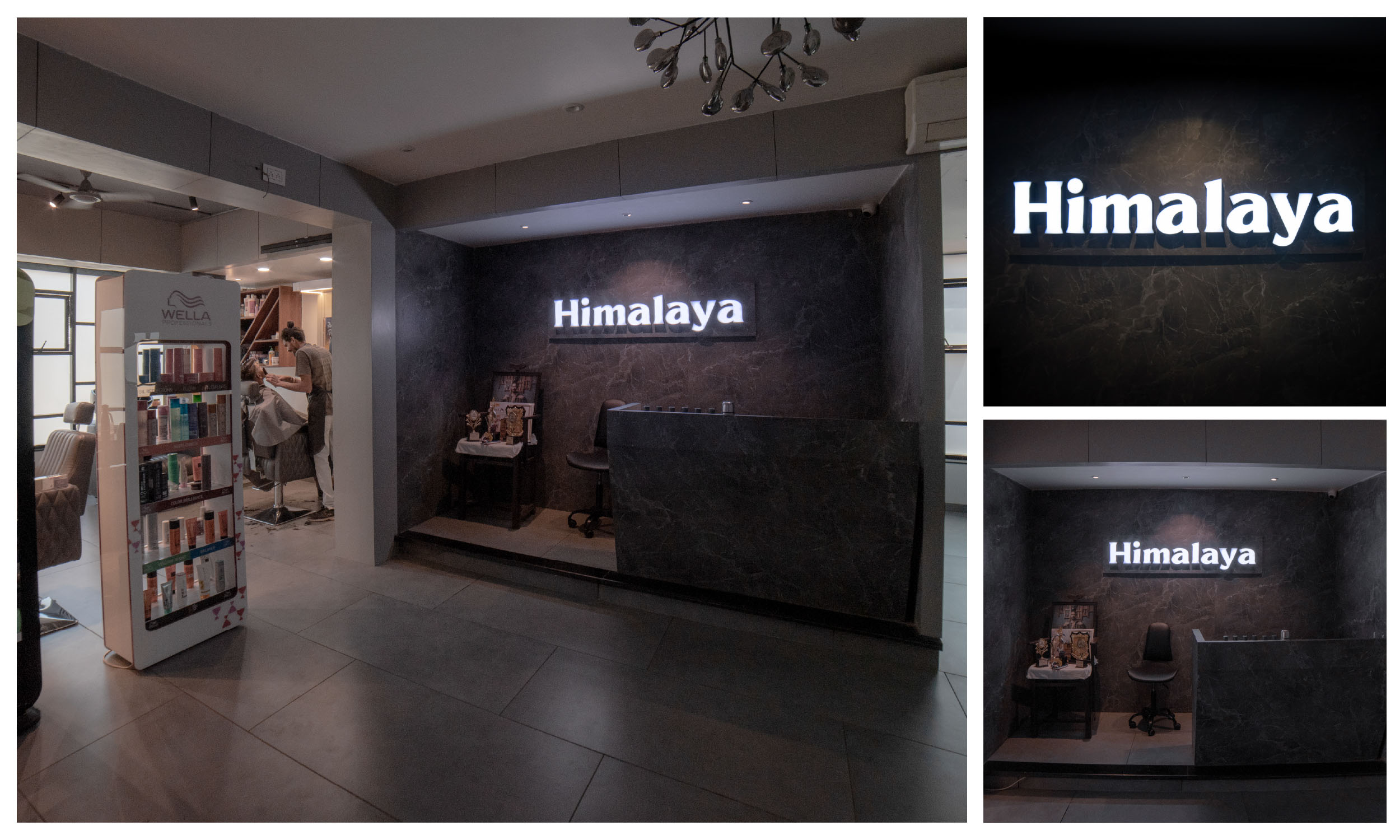
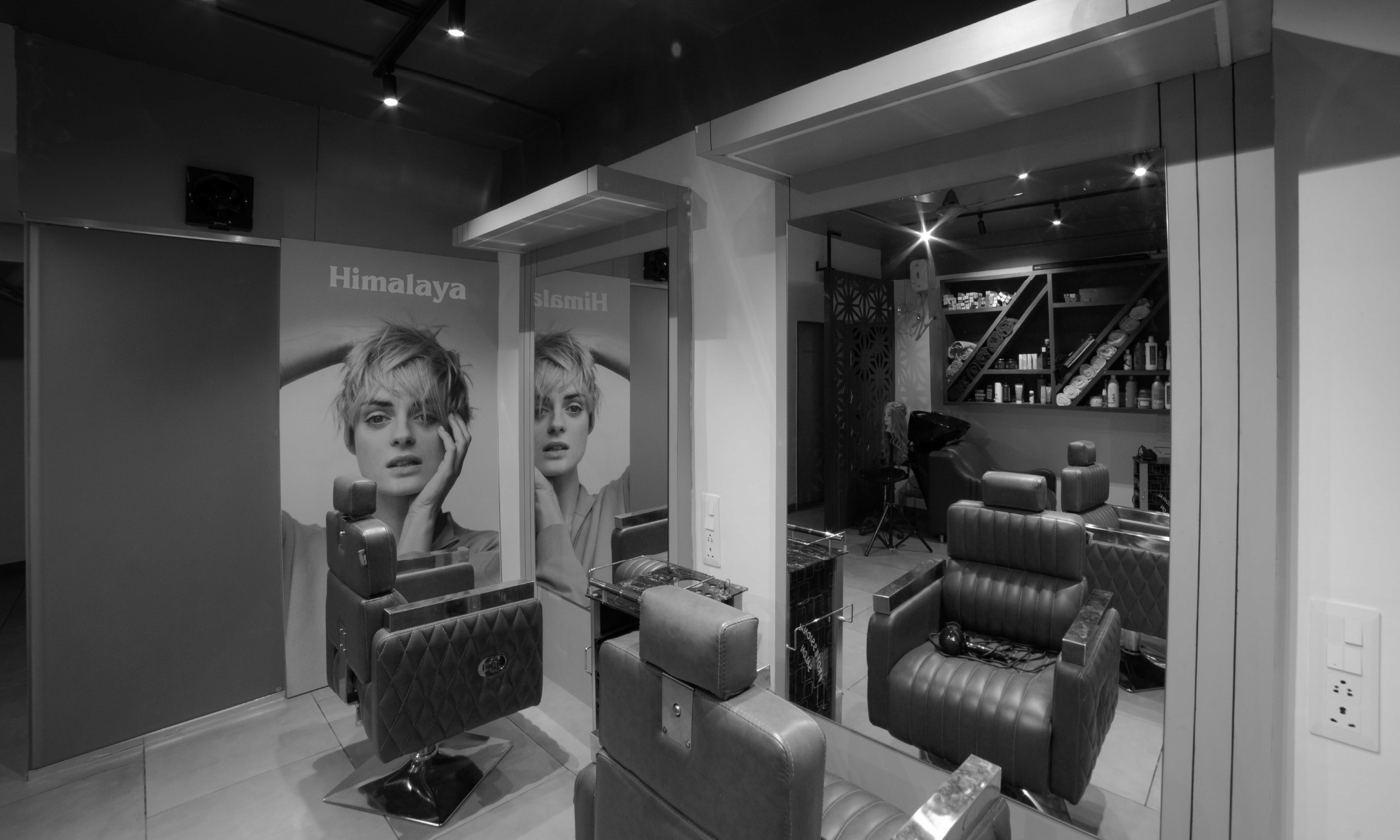
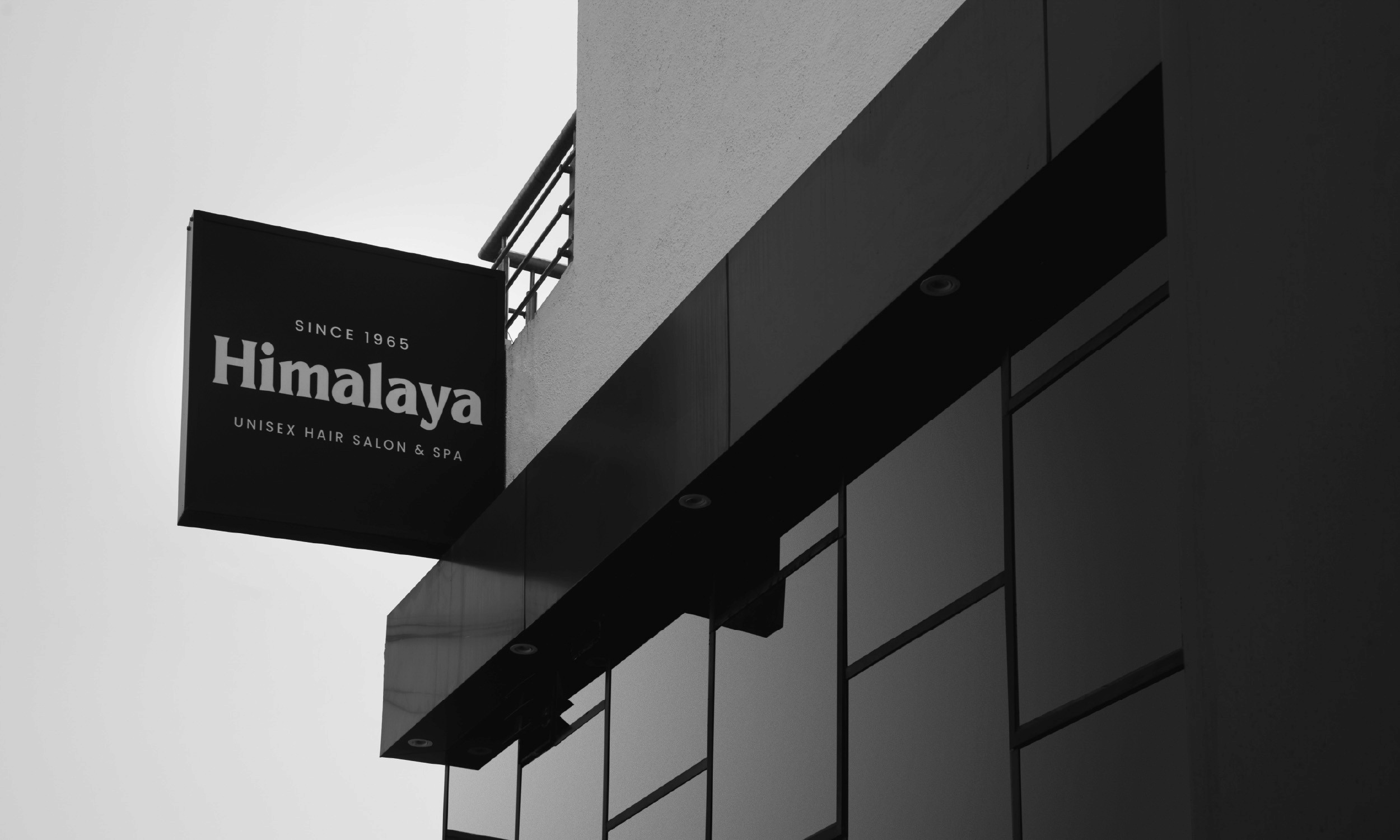
Spatial Integration
One of the strongest outcomes of the project is how the identity integrates with the physical space.